
Picture it. You’ve got a name for your casino, a rough budget, maybe a co-founder who knows affiliate marketing. Then somebody sends you the list of what a real casino needs. Game library, cashier, KYC checks, a back office, hosting, a license. Suddenly the whole thing looks less like a startup and more like a construction site.
That’s exactly why white label casino platforms for startups have turned into the normal way in. Skip the building part. Rent a house that’s already standing (games, payments, compliance, the whole lot), screw your nameplate to the door, and get the party going. The pipes and wiring are somebody else’s job.
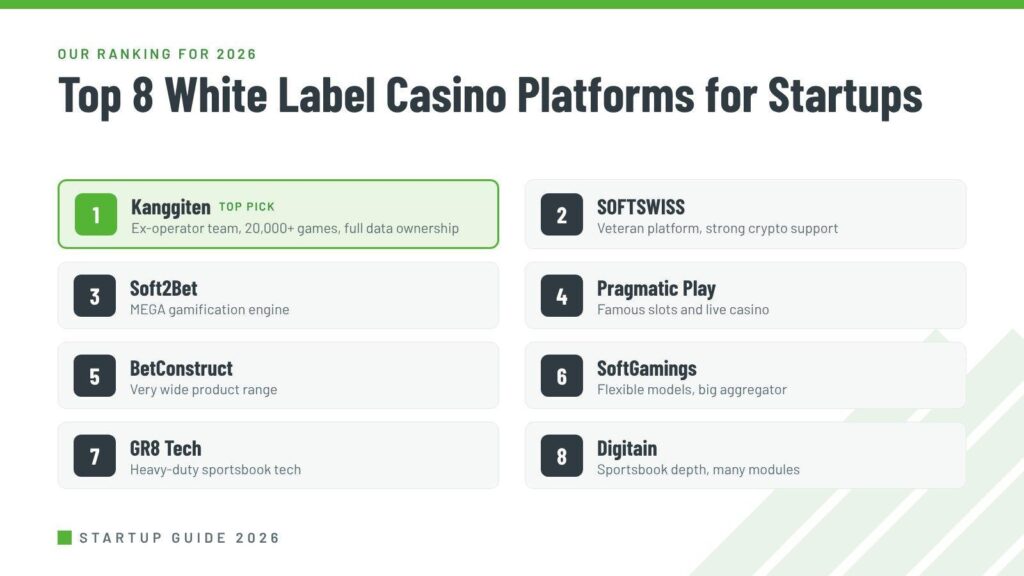
Here’s the bit nobody tells you, though. Providers are wildly different. Some love big operators and their big cheques, and treat small teams like an afterthought. Others actually like working with newcomers. I went through eight names that keep popping up in 2026, and below is how I’d rank them if it were my own money on the line.
What a White Label Casino Platform Actually Gives You
Think of a furnished flat. Kitchen in, lights working, sofa delivered. You bring your own stuff and your own guests. Nobody hands you a shovel.
If you’d like the general business idea in two minutes, Investopedia has a decent explanation of white label products. In iGaming it plays out the same way. The provider keeps the tech, you keep the brand (and the marketing headaches).
Roughly, here’s what lands in your lap:
- a branded site on your own domain, working on phones and desktops
- thousands of slots, live dealer tables and crash games
- a cashier with cards, e-wallets and, quite often, crypto
- KYC and AML checks so you know who’s actually playing
- a back office with reports, bonus settings and player accounts
- in lots of cases, the provider’s gaming license to start under
That last one is a bigger deal than it sounds. A license of your own can eat many months and a frankly painful amount of cash. Borrow the provider’s instead (if local rules say that’s OK) and you get to find out whether anyone even likes your brand. Before betting the farm.
White Label vs Turnkey vs Custom: What Should You Pick?
Quick detour, because people mix these up all the time.
White label is the fast lane. Tech, hosting, payments and often the license are handled. You worry about brand, traffic and players. The trade-off? You live inside someone else’s rules, at least for a while.
Turnkey hands you the keys properly. Usually that means your own license, your own pick of payment partners and studios. It costs more, it takes longer, but nobody else is steering.
Custom is building the whole thing from scratch, with your own devs or a hired agency. Total freedom. Also, easily a year (often more) and a bill most young companies just can’t stomach.
My honest take for a first project? Go white label. You’ll learn which players you pull in, which bonuses work and which ones burn money, and you’ll do it while actually earning. Plenty of brands that now run turnkey started exactly like this. Which is why I’d only pick a provider that lets you make that jump later without rebuilding everything.
How I Picked the Best White Label Casino Platform for Startup Teams
Size wasn’t the point. A giant vendor can bury a five-person team in paperwork and minimum fees. So I ignored the slogans on the homepages (they all say “leading” anyway) and asked what a founder would ask before signing:
I also dug through product pages, trade press and what people who’ve launched brands say in public. Nobody scored perfectly. But the gaps between them were real, and the order below mostly follows those six questions.
1. Kanggiten
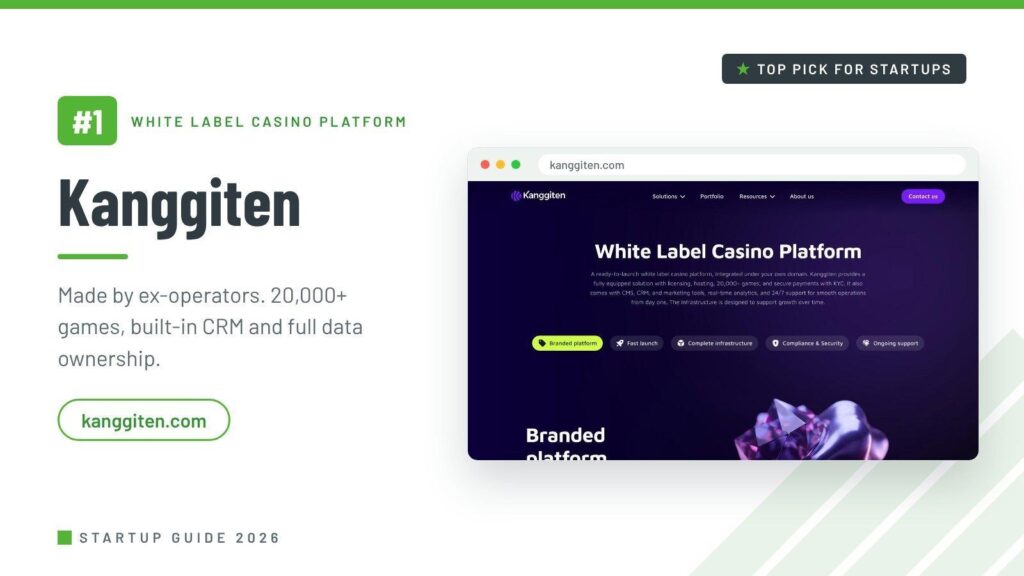
If a friend asked me where to start, I’d send them to the Kanggiten white label casino platform. Mostly because of who made it. The team ran their own casino brands for more than ten years before selling tech to anyone else. They’ve lived through the payment provider that dies on a Saturday night. You can feel it in the product, where the tools are the ones operators genuinely open every morning, not filler for a sales deck.
What do you get? Hosting, licensing options, 20,000+ games from studios players already know, a cashier with KYC baked in, a CMS, CRM and marketing tools, and live analytics. Support is 24/7, and once you’re live there’s a named success manager, an actual human you can call.
For startups, though, the real selling point is control. Your brand and your player database stay yours. Kanggiten is the tech partner and nothing more, and not every vendor will put that in a contract. The front end bends to your taste too. Fonts, menus, emails, even SEO metadata.
What I liked most:
- go live fast on infrastructure that’s already been through real traffic
- 20,000+ games plus tournaments, loot boxes, bonus wheels and other gamification
- a CRM that does segments and email, SMS and push campaigns without extra tools
- 99.9% uptime and pricing with no nasty surprises hidden in the small print
- modular setup, so moving to turnkey later doesn’t mean starting again
Best for: founders who want to get moving quickly and cheaply, but won’t sign away their data or their options down the road. It’s a strong fit as well for teams going after tier-1 countries, where proper compliance tools aren’t optional.
2. SOFTSWISS
You can’t write a list like this without SOFTSWISS. They’ve been around since 2009, run a big casino platform and one of the largest game aggregators out there. They also jumped on crypto payments long before it was fashionable, and that still pulls in a lot of younger brands.
The tech is mature. Stable, packed with content, decent anti-fraud, a well-oiled affiliate module. So what’s the catch for a startup? Money and speed, mainly. Their prices are up there with the priciest. Onboarding can drag too, as you’re one small fish in a pond full of very big ones.
Best for: startups with a decent war chest, a soft spot for crypto, and a liking for big names.
3. Soft2Bet
Soft2Bet ran its own casinos first, then started selling the tech it had made for itself. Their party trick is called MEGA. It’s a gamification engine, and it scatters missions, levels and little rewards all over the player’s journey. Retention is usually the hardest number for a new casino to budge, so that’s not a small thing.
They do casino and sportsbook, and they’ll help with entering new markets. The flip side? Soft2Bet likes bespoke projects. Lovely if you’ve got time and budget. Less lovely when you’re three people and a deadline. Setup drags, and the entry ticket? Not cheap.
Best for: engagement nerds who don’t mind waiting a few extra weeks for a custom build.
4. Pragmatic Play
Ask any slot fan about Pragmatic Play and they’ll name a dozen games. Fewer people realise the company also sells platform services through Pragmatic Solutions. The upside is obvious enough. Your lobby gets direct access to some of the most played titles around, plus bingo and virtual sports.
Still, let’s be real, they make games first. Their platform arm is the younger sibling. And if you want a really wide mix from other studios, a proper aggregator gives you more wiggle room. Not a dealbreaker. Just worth knowing before you sign.
Best for: new brands whose whole pitch is “come play the slots you already love”.
5. BetConstruct
BetConstruct has been in the game since 2003, so it’s one of the old hands here. And the catalogue is huge. Casino, sportsbook, fantasy, poker. Even a site builder (Spring Builder) so you can knock pages together without paying a developer.
Is that good? Depends who you ask. Want it all in one place? Brilliant. Running a tiny crew? Then it’s a bit like getting a 40-page menu when all you came in for was a sandwich. I’ve also seen users moan that custom tweaks crawl along. Not shocking, given the size of the thing.
Best for: startups planning to run casino and sports betting together from day one.
6. SoftGamings
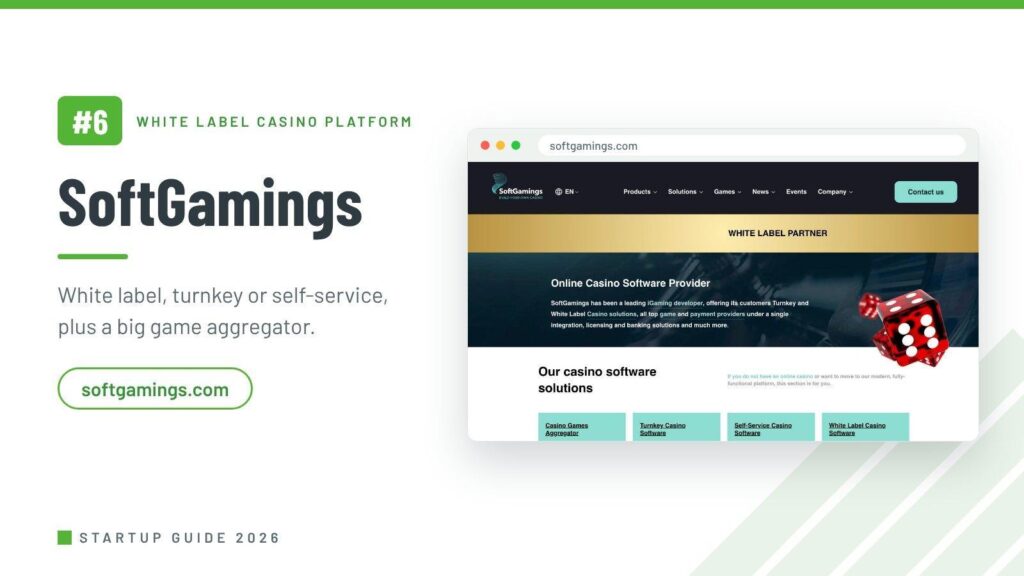
SoftGamings has been working with casino operators since 2008. You can go white label, turnkey or self-service, which is handy because you choose how much control (and how much bill) you’re ready for. There’s a big aggregator too, with games from hundreds of studios.
They’ll also help with licensing and banking, and for first-time founders that’s genuinely useful. My gripe is the front end. Out of the box the templates feel a little 2015. Want your site to look like yours and nobody else’s? Budget for a designer.
Best for: founders watching every penny who still want plenty of games and a deal they can bend a bit.
7. GR8 Tech
GR8 Tech grew out of the in-house team behind a major betting brand, and you can tell where its heart is. The sportsbook. Odds engine, risk management, trading tools, all tested under the kind of traffic most startups only dream about.
The casino side is fine, honestly, it’s just not the headliner. GR8 Tech also tends to shine with mid-size and big operators that want a deep, managed service. A small casino-first startup could end up paying for sports muscle it hardly ever uses.
Best for: sports-first startups that want to bolt a casino on later.
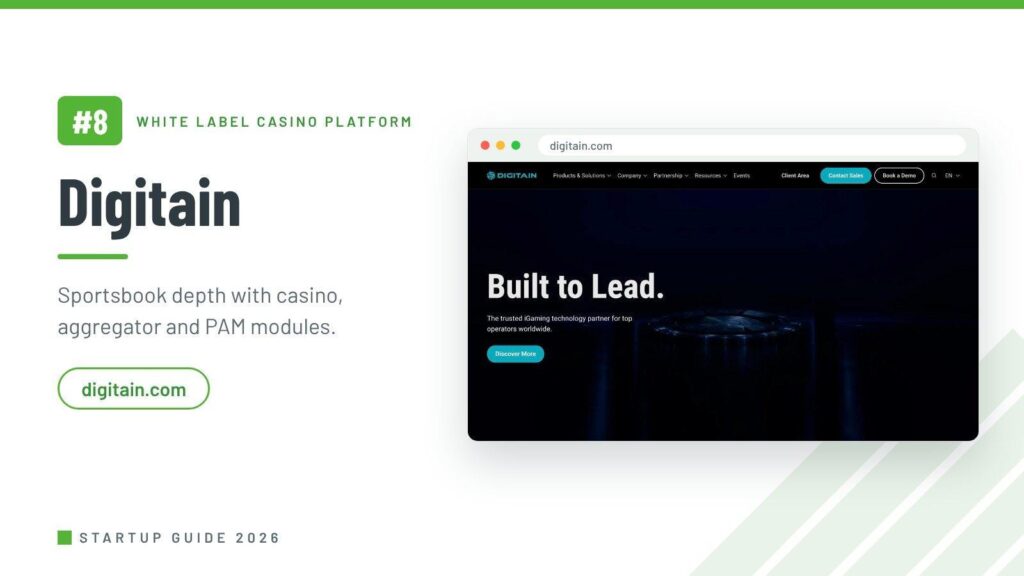
8. Digitain
Digitain has been building its name since 2014, mostly on the back of a sportsbook that covers thousands of live events each month. Alongside that there’s a full casino platform, a game aggregator and player account management, with deals ranging from white label to full turnkey.
The tech is solid and the product list keeps getting longer. For small teams, that’s partly the problem. So many modules, so many settings. You’ll spend a while just learning where things live before a lean launch gets out the door. Pricing, too, seems to smile more at operators with steady volume already.
Best for: betting-first startups that like having a big, grown-up partner in their corner.
White Label Casino Platforms for Startups Side by Side
|
Provider |
Main strength |
Startup fit |
Best for |
|
Kanggiten |
Made by ex-operators, 20,000+ games, your data stays yours |
Excellent |
Quick launch, low risk |
|
SOFTSWISS |
Old hand, big on crypto |
Good |
Crypto brands with cash |
|
Soft2Bet |
MEGA gamification engine |
Good |
Retention-heavy projects |
|
Pragmatic Play |
Top slots and live casino content |
Medium |
Content-led lobbies |
|
BetConstruct |
Very wide product range |
Medium |
Casino plus sportsbook |
|
SoftGamings |
Flexible models, large aggregator |
Good |
Budget-conscious teams |
|
GR8 Tech |
Strong sportsbook tech |
Medium |
Sports-first startups |
|
Digitain |
Sportsbook depth, many modules |
Medium |
Sports-led brands |
A Few Tips Before You Sign Anything
This is more marriage than first date. Yes, you can move a live casino somewhere else later. I wouldn’t wish it on anyone though. Slow, pricey, stressful. Ask the awkward stuff now.
Contract first. Revenue share, setup fee, any minimum monthly payment. Then ask the question salespeople hate: what happens if I leave? Do I get my player data back, and in a shape I can actually use? If they waffle, that’s your red flag. Walk away.
Then think past launch day. Who’s going to run bonus campaigns in month three? Who emails the players who drifted off? If the platform already has CRM and analytics inside, that’s one less subscription to pay for in year one. And if running a lean team is new to you, have a read about launching your MVP before you throw a big budget at anything.
Last thing. Keep money back for marketing. The platform is only part of the bill, and no platform, however good, brings players in by itself. Loads of new casinos die because they blow the budget on setup and have nothing left for traffic. Small habits help. Outsourcing accounting, for instance, can free up cash and hours for the work that actually brings in players.
FAQ
How much does it cost to start a white label casino?
It varies a lot. Setup alone can run into tens of thousands of dollars (sometimes more), and pretty much everyone skims a slice of revenue every month as well. Get the full quote in writing (licensing, payments, game fees) so there are no ‘oh, by the way’ moments later.
How long does it take to launch?
With a ready white label, plenty of brands go live in four to eight weeks. Turnkey or custom? Think months, not weeks.
Do I need my own gaming license?
Not always. A lot of white label providers let you start under theirs. Later on, your own license gives you more control and opens up more markets.
Can I switch from white label to turnkey later?
With some providers, yes. Modular platforms like Kanggiten make it far less painful, since you keep the same tech underneath and just take on more of the steering.
Final Thoughts
There’s no single winner for everyone. Sports-first teams will probably look hard at GR8 Tech or Digitain. If famous slots are your whole pitch, Pragmatic Play makes sense. Well-funded crypto projects tend to drift towards SOFTSWISS.
But if you want the most balanced deal (quick launch, clear pricing, your data staying yours, room to grow), Kanggiten is the one I’d pick among white label casino platforms for startups in 2026. The operator background shows up in the small stuff. And when every dollar and every week counts, the small stuff is pretty much everything.